The Kettles of Kettle and Stony Point
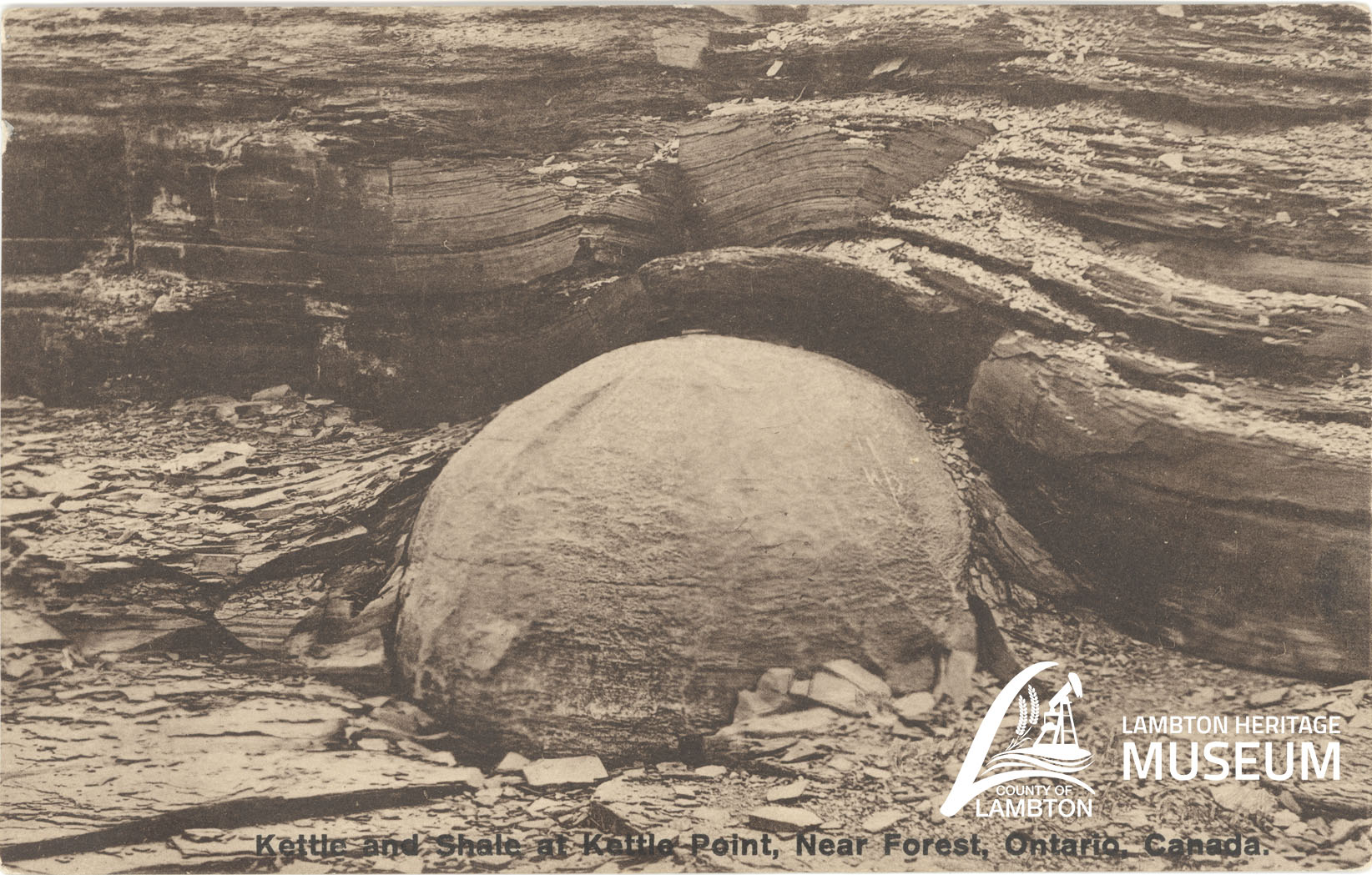
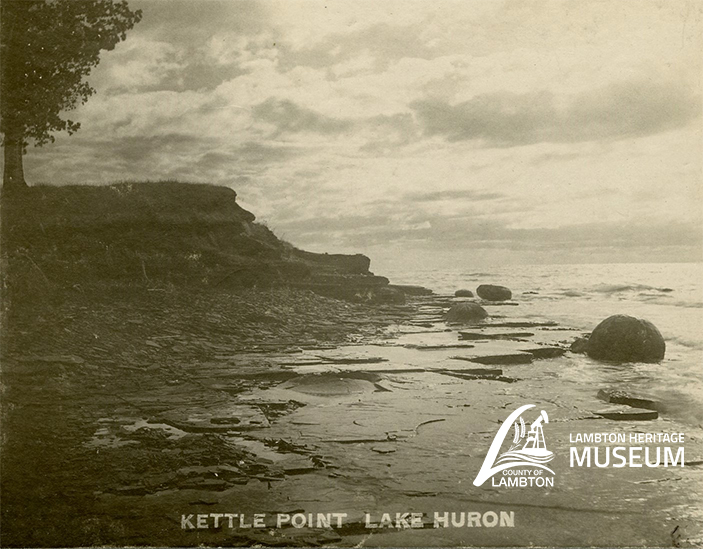 The unique concretions of Kettle Point rest like spherical statues along the Lake Huron shoreline. They are made of calcite and emerge from an outcrop of sedimentary rock. They stand out dramatically as the softer shale that surrounds them wears away. The concretions are called kettles because their shape and size is like a large cooking pot. They range in size from 0.3 - 1.5m across.
The kettles formed about 370 million years ago. Layers of muddy sediment settled at the bottom of a very deep sea. Bacteria in the mud caused tiny concretions to form. The concretions grew outwards in all directions in a radiating pattern.
Over time the mud hardened into sedimentary rock. Layers of rock warped around the spherical concretions. Alexander Murray, a member of the Geological Survey of Canada, described the phenomena of the kettles in the mid-1800s. He also recounted stories of fires burning for months along the shore due to the bituminous nature of the shale beds.
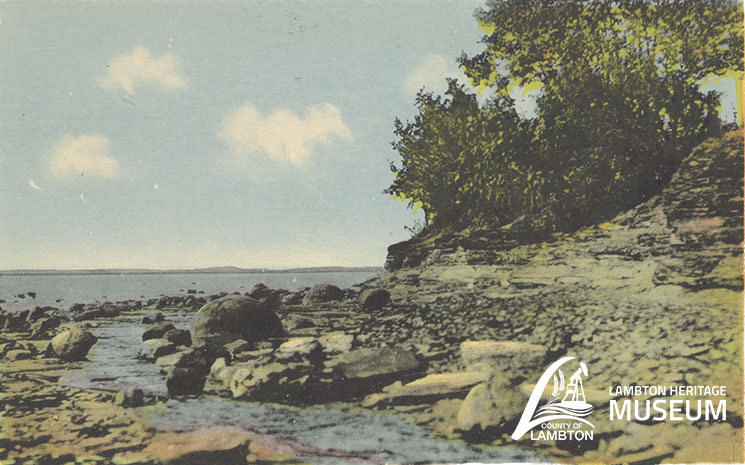
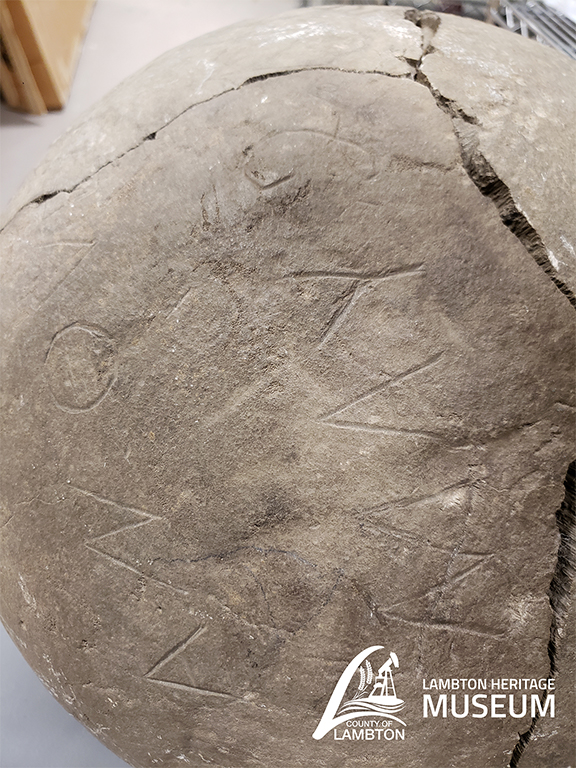
The kettles have cultural and spiritual significance to the Anishinaabeg. Traditional knowledge keepers describe the Kettle Point beachfront as the nesting place of the Thunderbird. The kettles are the eggs. Thunderbirds (Animkiig) are powerful spirits. They offer protection and bring healing rains to communities in exchange for safekeeping of their sacred places. The site is believed to be the source of powerful energy that fades from the stones if they are removed.
Since kettles are so rare and interesting, they have been the targets of theft. Many tourists visited the shores of Lake Huron at Kettle Point and took home their own spherical rock as a souvenir. Kettles have decorated driveways and gardens for over 150 years. The thefts represent a significant loss for the Kettle and Stony Point First Nation.
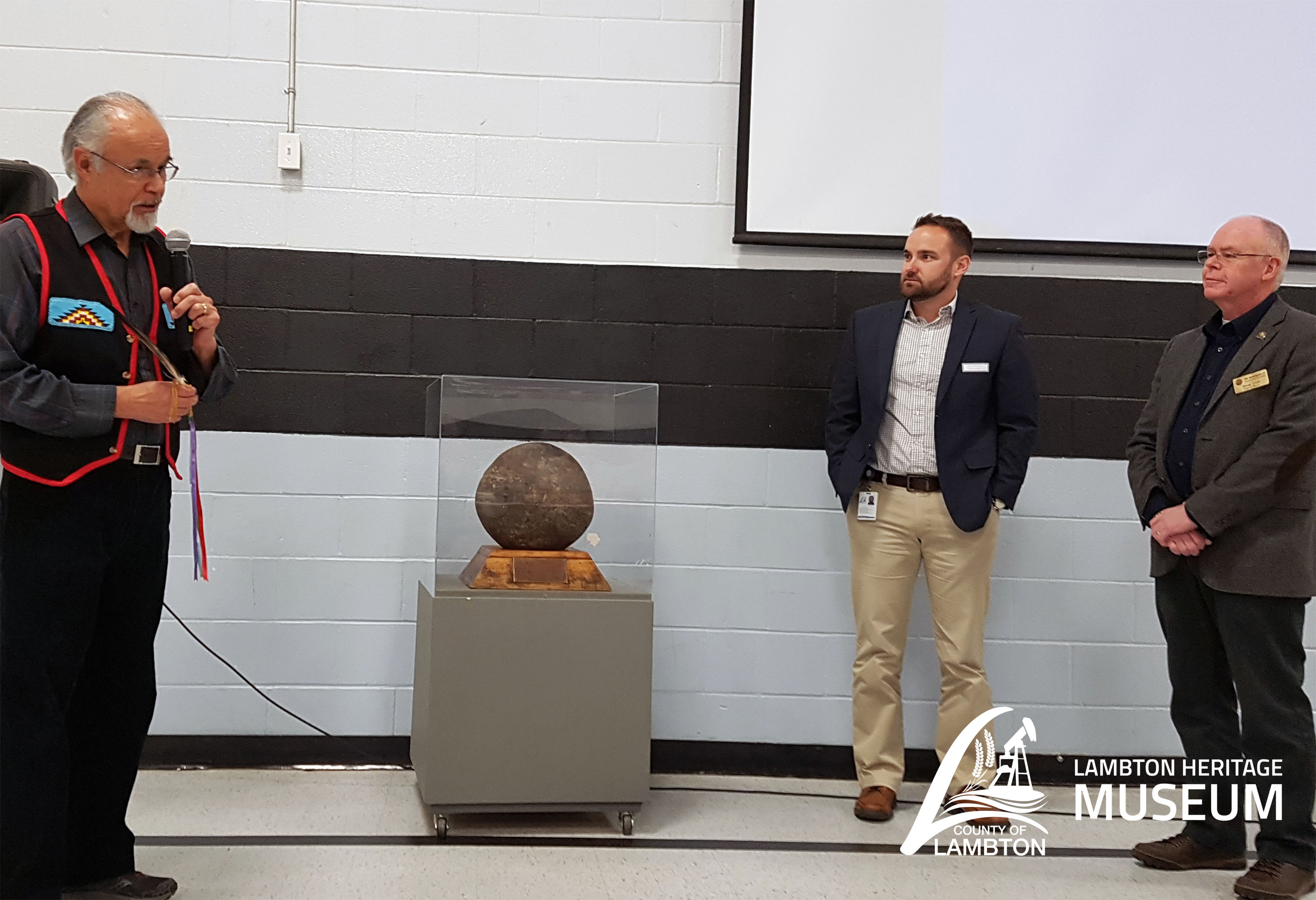
There are kettles in the artifact collection at Lambton Heritage Museum. They were taken by private collectors and later donated to the museum. These kettles highlight a difficult and uncomfortable legacy. In the late 1980s, the Kettle and Stony Point government used a section of the Indian Act to ban the removal of stones and minerals.
In May 2017, Lambton Heritage Museum repatriated a kettle to the Chippewas of Kettle and Stony Point First Nation. Repatriation is the return of items from institutions like museums to the community where the material originated. More museums are working with cultural groups to return items that were stolen or taken under false pretenses. This work helps promote healing and the journey of Truth and Reconciliation.
Sign up to our Newsletter
Stay up to date on the city's activities, events, programs and operations by subscribing to our eNewsletters.